
Late-summer travel and schedule changes can create conditions associated with drowsy driving. Long return trips, early departures, late-afternoon driving, changing school routines, and accumulated sleep loss can leave a driver less alert behind the wheel. PennDOT reported 2,612 Pennsylvania crashes involving a drowsy or asleep driver in 2024, resulting in 15 fatalities. NHTSA identifies midnight to 6 a.m. and the late afternoon as common periods for drowsy-driving crashes and notes that these crashes often occur on rural roads and highways.
Those figures do not establish that drowsy-driving crashes always increase at the end of summer. They do show that fatigue is a documented traffic-safety problem, and late-summer travel can create several conditions associated with reduced alertness.
If you are injured in a crash in Lancaster, Pennsylvania, evidence may help show whether fatigue contributed to the collision. That evidence can also affect questions about negligence, insurance coverage, damages, and the steps needed to protect an injury claim.
Fatigue does not need to make a driver fall asleep to become dangerous. Reduced alertness can affect reaction time, attention, judgment, and lane control.


Why Late-Summer Travel Can Create Drowsy-Driving Risks 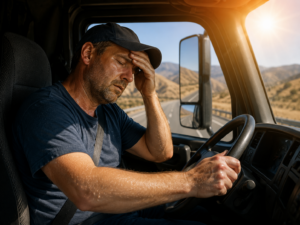
The final weeks of summer often bring changes in travel and sleep schedules. You may be returning from vacation, moving a student to college, preparing children for school, working a different schedule, or trying to complete a long drive before work resumes.
A driver who wakes earlier than usual, spends a full day traveling, or starts a trip after a late night may have less rest than the body needs. Fatigue can develop gradually, which can make it difficult for a driver to recognize how much alertness has declined.
Familiar roads do not remove the risk. A driver may believe the destination is close enough to continue or that coffee, music, or an open window will solve the problem. Those measures do not replace adequate sleep.
NHTSA states that drowsy-driving crashes occur most frequently between midnight and 6 a.m. or in the late afternoon. The agency also reports that these crashes often occur on rural roads and highways. Those patterns can matter in Lancaster County, where drivers may move between city streets, major routes, highways, and rural roads during the same trip.
NHTSA drowsy-driving information:
https://www.nhtsa.gov/risky-driving/drowsy-driving
PennDOT drowsy-driving information:
Common End-of-Summer Fatigue Triggers
Several late-summer situations can leave a driver more tired than expected:
- Returning home after a long vacation day
- Driving late at night to avoid heavier traffic
- Leaving before sunrise for an airport, event, school activity, or work shift
- Sleeping poorly in a hotel or unfamiliar setting
- Managing children, luggage, schedules, and navigation during a trip
- Driving after a long workday or outdoor activity
- Changing sleep schedules as school and work routines restart
- Taking medication with a warning that it may cause drowsiness
Warning signs can include heavy eyelids, repeated yawning, missed exits, lane drifting, delayed braking, or difficulty remembering the last few miles of a trip. If you notice signs of drowsiness while driving, the safest response is to stop driving when you can do so safely and get adequate rest.
McDonald At Law has a related resource about drowsy-driving warning signs:
https://mcdonaldatlaw.com/look-out-for-the-signs-of-drowsy-driving/
“Highly Recommended” is the epitome of an understatement when it comes to the firm of McDonald At Law!! Michael McDonald’s genuine pleasant, and empathetic demeanor masks his legal astuteness, and the level of aggressiveness he implements in pursuit of a victim’s right and the monetary compensation legally entitled to us. I was involved in a motor vehicle accident at the hands of an intoxicated driver in York County. In my case I suffered what I described as an atypical injury, Mr. McDonald offered to be my Lawyer immediately after explaining to him the events leading to and after being struck in turn causing me to have a heart attack, when another law firm seemed hesitant. McDonald At Law secured a sizable monetary compensation that not only met my expectation but exceeded it. Mr. McDonald’s wealth of experience, and legal prowess is priceless and never did he act as the case was beneath his practice. In the end my family and I were well compensated, but also felt justified. Thank you McDonald At Law!!- Miguel Lopez
How Fatigue Can Cause a Lancaster Car Accident
Fatigue can contribute to several types of collisions. A tired driver may react too slowly when traffic stops on Route 30, fail to notice a vehicle entering an intersection, drift toward the shoulder or another lane, or misjudge the distance needed to merge safely.
Fatigue can also make other driving demands harder to manage. Navigation systems, passengers, changing traffic, and unexpected hazards all require attention. A driver with reduced alertness may have less time to identify a danger and respond safely.
Consider a late-August example. A family spends the day outside Lancaster and begins the drive home later than planned. The driver has been awake since early morning and wants to arrive before the next workday. Traffic slows ahead, but the driver notices the brake lights too late and causes a rear-end collision.
Fatigue alone does not automatically prove negligence. Evidence must connect the driver’s conduct to the collision and the injuries that resulted. The driver’s statements, travel history, work schedule, lane movements, braking, and other records may help explain what happened.
For more information about Lancaster County car accident claims, visit:
https://mcdonaldatlaw.com/lancaster-county-car-accident-lawyers//
What Evidence Can Show That a Driver Was Drowsy?
Unlike alcohol impairment, fatigue is rarely established through one roadside test. A drowsy-driving claim may depend on several pieces of evidence that create a timeline of the driver’s activity, alertness, and conduct before the collision.
Useful evidence may include:
- The police crash report
- Witness statements about yawning, drifting, delayed reactions, or erratic driving
- Dashcam, traffic-camera, business-surveillance, or doorbell video
- Vehicle event data when it is available and relevant
- Cell phone records obtained through lawful legal process
- Work schedules, time records, delivery records, or dispatch information
- Hotel, fuel, toll, parking, or travel receipts
- Navigation or trip records
- Statements made by the driver at the scene
- Photographs showing vehicle positions, road marks, lane location, debris, or impact points
Commercial-driver cases can involve other records, including electronic logging data, dispatch records, employer documents, inspection materials, and vehicle information. The evidence available in a particular case depends on the facts, the vehicles involved, and how quickly relevant records are preserved.
Putting off an Attorney due to Cost Choosing a Personal Injury AttorneyRelated Videos
What Should You Do After a Suspected Drowsy-Driving Crash?
Your first priority should be health and safety. Call 911, move to a safe location when you can do so without creating more danger, and obtain appropriate medical care. Some injuries may become more noticeable after the initial stress of a collision subsides.
When your condition allows, take practical steps to preserve information:
- Photograph vehicle positions, damage, road conditions, debris, traffic controls, and visible injuries.
- Get names and contact information from witnesses.
- Save the police incident information and insurance details.
- Keep medical records, bills, repair estimates, wage-loss records, receipts, and insurance correspondence.
- Preserve original photographs and videos rather than keeping only edited copies.
- Write down statements made by the other driver while your memory is fresh.
- Avoid guessing about whether the other driver fell asleep.
You do not need to prove fatigue at the crash scene. It is often more useful to document what you observed, such as lane drifting, delayed braking, a lack of visible evasive action, or statements the driver made after the collision.
The firm provides more information about what to collect after an accident:
https://mcdonaldatlaw.com/what-information-should-you-collect-after-an-accident/
You can also review steps to take after a car accident:
https://mcdonaldatlaw.com/what-steps-should-you-take-after-a-car-accident/
How Pennsylvania Fault Rules May Affect a Drowsy-Driving Claim
A drowsy-driving injury claim generally depends on negligence. You must be able to connect the other driver’s unsafe conduct to the collision and the injuries or losses for which you seek compensation.
Evidence that a driver continued driving despite signs of severe fatigue may support that analysis, but each crash requires its own factual review. A driver may also dispute fatigue or argue that another condition caused the collision.
Pennsylvania follows a modified comparative negligence rule under 42 Pa.C.S. § 7102. You may recover damages when your negligence is not greater than the causal negligence of the defendant or defendants from whom you seek recovery. Any recovery is reduced in proportion to your share of fault.
Pennsylvania comparative-negligence statute:
https://www.legis.state.pa.us/WU01/LI/LI/CT/HTM/42/00.071.002.000..HTM
Insurance coverage can affect the claim as well. Pennsylvania motor vehicle policies may involve a full-tort or limited-tort election. That election can affect the ability to recover certain noneconomic damages, subject to statutory exceptions and the facts of the claim.
The firm explains full-tort and limited-tort issues here:
https://mcdonaldatlaw.com/limited-v-full-tort-insurance-what-is-the-difference/
Pennsylvania’s tort-options statute is available here:
https://www.legis.state.pa.us/WU01/LI/LI/CT/HTM/75/00.017.005.000..HTM
Verdicts & Settlements
What Compensation May Be Available?
If another driver’s negligence caused your injuries, you may be able to pursue compensation for losses supported by the evidence and Pennsylvania law.
Depending on the facts, recoverable losses may include:
- Medical expenses
- Future medical care
- Lost wages
- Reduced earning capacity
- Property damage
- Pain and suffering when permitted under applicable law and coverage
- Physical limitations
- Other documented accident-related losses
The value of a claim depends on factors such as injury severity, fault, insurance coverage, medical evidence, wage loss, future limitations, and the long-term effects of the crash. A responsible evaluation requires the facts and supporting records. No attorney can promise a specific result at the beginning of a case.
Pennsylvania generally provides a two-year limitations period for a personal injury action based on negligence under 42 Pa.C.S. § 5524. Different rules, exceptions, or notice requirements may apply in some circumstances, including certain claims involving government units. Evidence can also disappear before a filing deadline expires.
Pennsylvania two-year limitations statute:
https://www.legis.state.pa.us/WU01/LI/LI/CT/HTM/42/00.055.024.000..HTM
How a Lancaster Car Accident Lawyer Can Help
A drowsy-driving crash may appear straightforward when one vehicle rear-ends another or leaves its lane. The more difficult question can be proving why the driver failed to react and connecting that conduct to your injuries and financial losses.
A Lancaster car accident lawyer may help by:
- Investigating how the collision occurred
- Preserving available video and electronic vehicle data
- Interviewing witnesses
- Obtaining relevant records through lawful processes
- Reviewing applicable insurance coverage
- Organizing medical evidence and wage-loss documentation
- Evaluating comparative-negligence arguments
- Calculating documented losses
- Communicating and negotiating with insurers
- Filing a lawsuit when litigation becomes necessary
The goal is to build a factual record that explains what happened without relying on speculation.
Speak With a Lancaster Car Accident Attorney
If you were injured by a driver who may have been fatigued or drowsy in Lancaster, Pennsylvania, McDonald At Law can review the circumstances, explain the insurance and legal issues that may apply, and help you identify practical next steps.
The firm handles car accident matters in Lancaster, Pennsylvania, and nearby areas.
Call 717-899-1907 to request a consultation.
You can also contact the firm online:
https://mcdonaldatlaw.com/contact-us/
Every case depends on its facts, available evidence, insurance coverage, and applicable law. No particular result can be promised.
Official Sources
National Highway Traffic Safety Administration, Drowsy Driving:
https://www.nhtsa.gov/risky-driving/drowsy-driving
Pennsylvania Department of Transportation, Dangers of Drowsy Driving:
Pennsylvania comparative-negligence statute:
https://www.legis.state.pa.us/WU01/LI/LI/CT/HTM/42/00.071.002.000..HTM
Pennsylvania tort-options statute:
https://www.legis.state.pa.us/WU01/LI/LI/CT/HTM/75/00.017.005.000..HTM
Pennsylvania two-year limitations statute:
https://www.legis.state.pa.us/WU01/LI/LI/CT/HTM/42/00.055.024.000..HTM
This article is for informational purposes only and is not legal advice. Consult an attorney about your specific situation.

 
 |


 |