After a Pennsylvania car accident, your applicable auto insurance is usually the first source of payment for accident-related medical bills, even when another driver caused the crash. Under 75 Pa.C.S. § 1711, Pennsylvania auto policies generally must include at least $5,000 in first-party medical benefits for covered people. These benefits apply without regard to who caused the collision.
If your first-party medical benefits are exhausted, health insurance may become a source of payment for covered treatment. If another driver caused the crash, you may also have a liability claim for losses that are not paid or payable through first-party benefits.
McDonald At Law helps injured people in Lancaster, Pennsylvania, and nearby areas understand which coverage may apply, how medical bills should be handled, and what options may be available when losses remain.


Why Your Own Auto Insurance Usually Pays First 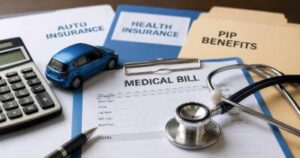
Pennsylvania uses first-party medical benefits to pay covered medical expenses after many motor vehicle accidents. The $5,000 minimum medical benefit required by 75 Pa.C.S. § 1711 is part of the coverage carried for your own protection.
That means the payment order can differ from the question of who caused the crash. If another driver runs a red light and hits you, the other driver’s liability insurer does not usually pay each medical bill as soon as treatment occurs. Your applicable first-party auto medical coverage is generally the first source for covered accident-related treatment.
Pennsylvania law refers to this coverage as medical benefits or first-party benefits. You may also hear people call it personal injury protection, or PIP. The statute covers reasonable and necessary medical treatment and rehabilitative services arising from the maintenance or use of a motor vehicle.
For steps to take after a collision, visit:
https://mcdonaldatlaw.com/what-steps-should-you-take-after-a-car-accident/
Your medical-bill coverage and your claim against the at-fault driver are separate insurance issues. Your own first-party coverage can pay covered treatment while a liability claim is still being investigated.
Who Pays Medical Bills If You Were a Passenger?
If you were hurt as a passenger, Pennsylvania law uses an order of priority to identify the first-party policy that should respond. Under 75 Pa.C.S. § 1713, coverage generally applies in this order:
- The policy on which you are the named insured
• A policy under which you qualify as an insured
• The policy covering the vehicle you occupied
• If you were not occupying a vehicle, a policy covering a motor vehicle involved in the accident
If you have applicable coverage through your own policy or a policy under which you qualify as an insured, that coverage may come before the policy on the vehicle in which you were riding.
When several policies may apply, reviewing the policy language and the statutory priority rules can help identify the correct carrier.
“Highly Recommended” is the epitome of an understatement when it comes to the firm of McDonald At Law!! Michael McDonald’s genuine pleasant, and empathetic demeanor masks his legal astuteness, and the level of aggressiveness he implements in pursuit of a victim’s right and the monetary compensation legally entitled to us. I was involved in a motor vehicle accident at the hands of an intoxicated driver in York County. In my case I suffered what I described as an atypical injury, Mr. McDonald offered to be my Lawyer immediately after explaining to him the events leading to and after being struck in turn causing me to have a heart attack, when another law firm seemed hesitant. McDonald At Law secured a sizable monetary compensation that not only met my expectation but exceeded it. Mr. McDonald’s wealth of experience, and legal prowess is priceless and never did he act as the case was beneath his practice. In the end my family and I were well compensated, but also felt justified. Thank you McDonald At Law!!- Miguel Lopez
What Medical Expenses Can First-Party Benefits Cover?
Under 75 Pa.C.S. § 1712, first-party medical benefits can cover reasonable and necessary medical treatment and rehabilitative services related to the crash.
Covered services may include:
- Hospital care
• Surgical treatment
• Ambulance services
• Dental treatment
• Psychiatric or psychological treatment
• Chiropractic care
• Licensed physical therapy
• Nursing services
• Occupational therapy
• Speech pathology and audiology services
• Optometric services
• Medications
• Medical supplies
• Prosthetic devices
• Other reasonable and necessary rehabilitative services
The minimum required medical benefit is $5,000. Under 75 Pa.C.S. § 1715, insurers must also make higher medical benefit limits available for purchase, including limits of at least $100,000.
A serious injury can use a $5,000 limit quickly. Emergency transportation, diagnostic imaging, specialist care, therapy, medications, and follow-up appointments can create substantial medical charges within a short period.
Putting off an Attorney due to Cost Choosing a Personal Injury AttorneyRelated Videos
What Happens When Your First-Party Medical Benefits Are Exhausted?
When your available first-party medical benefits reach the policy limit, the auto insurer should provide notice that the medical benefit has been exhausted. Health insurance may then become a source of payment for covered treatment.
Under Pennsylvania’s coordination-of-benefits rule in 75 Pa.C.S. § 1719, first-party auto coverage is generally primary to other health benefit arrangements, with workers’ compensation treated separately.
Keep the exhaustion notice and provide it to medical providers or your health insurer when requested. Your health plan may still apply:
- Deductibles
• Copayments
• Coinsurance
• Network requirements
• Coverage exclusions
• Prior authorization requirements
Some health plans may contain reimbursement provisions that require review after a personal injury recovery. The plan language and the law governing the plan can affect whether reimbursement is permitted.
For guidance on preserving records after a crash, visit:
https://mcdonaldatlaw.com/what-information-should-you-collect-after-an-accident/
Verdicts & Settlements
Does the At-Fault Driver Pay Your Medical Bills?
The at-fault driver may ultimately be responsible for legally recoverable damages, but that usually happens through a bodily injury liability claim rather than direct payment of each bill while you are receiving treatment.
If another driver’s negligence caused the collision, a liability claim may address losses that are not paid or payable through first-party benefits. Depending on the facts, recoverable damages may include:
- Unpaid medical expenses
• Future medical needs
• Lost income
• Reduced earning capacity
• Other out-of-pocket losses
• Pain, suffering, and other noneconomic losses when Pennsylvania law permits recovery
Pennsylvania law generally prevents you from recovering required first-party benefits twice. Under 75 Pa.C.S. § 1722, amounts paid or payable through applicable first-party benefits can affect what may be recovered from the at-fault party.
Before resolving a liability claim, unpaid balances, future treatment, wage loss, insurance issues, and any reimbursement questions should be reviewed together.
Does Limited Tort Change Who Pays Your Medical Bills?
Limited tort and full tort usually do not determine which insurer pays your first-party medical bills. Your tort selection primarily affects your right to recover pain, suffering, and other noneconomic damages from an at-fault driver.
Under Pennsylvania law, a person subject to limited tort can generally recover medical and other out-of-pocket losses, while recovery of noneconomic damages is restricted unless a statutory exception applies.
You can still have first-party medical benefits when limited tort applies. You may also have a liability claim for recoverable economic losses.
For more information, visit:
https://mcdonaldatlaw.com/limited-v-full-tort-insurance-what-is-the-difference/
What If the Car Accident Happened While You Were Working?
A work-related motor vehicle accident can involve both workers’ compensation and auto insurance.
Pennsylvania’s coordination rule treats workers’ compensation differently from other benefit arrangements. If you were injured while acting within the course and scope of your employment, workers’ compensation may be responsible for medical treatment and wage-loss benefits.
You may also have a separate third-party claim when someone other than your employer or a co-worker caused the crash. These claims can raise questions involving liens, reimbursement, insurance priority, wage loss, and settlement terms.
Because the interaction between workers’ compensation and a third-party car accident claim can affect the value and distribution of a recovery, the available policies and benefit payments should be reviewed together.
What If You Do Not Have Auto Insurance in Your Name?
You may still have access to first-party benefits even if you do not have an auto policy in your own name.
Under Pennsylvania’s priority rules, you may qualify as an insured under another applicable policy. If no higher-priority policy applies, coverage on the vehicle you occupied may become the source of first-party benefits.
There are statutory exceptions. Under 75 Pa.C.S. § 1714, an owner of a currently registered motor vehicle who does not maintain required financial responsibility cannot recover first-party benefits.
Motorcycle cases also follow different rules. Pennsylvania’s first-party benefit provisions exclude motorcycles and certain similar vehicles from the standard medical benefit requirements, so motorcycle-related coverage should be reviewed separately.
How Fast Should the Auto Insurer Pay First-Party Benefits?
Under 75 Pa.C.S. § 1716, first-party benefits become overdue if they are not paid within 30 days after the insurer receives reasonable proof of the amount due. If reasonable proof supports only part of the claim, the supported portion can become overdue after that 30-day period.
The 30-day rule does not require an insurer to pay every bill automatically. An insurer may examine whether treatment is related to the accident, medically necessary, supported by documentation, and within the available policy limit.
If a medical bill remains unpaid, ask the provider:
- Which insurer was billed?
• Was the bill accepted, denied, or returned?
• What reason was given for nonpayment?
• Is additional documentation required?
• Has the first-party medical limit been exhausted?
Keep copies of denials, payment records, explanation-of-benefits statements, exhaustion notices, and correspondence.
What Records Should You Keep After a Pennsylvania Car Accident?
A well-organized file can help you track what has been billed, paid, denied, or left outstanding.
Keep copies of:
- Auto insurance declarations pages
• Auto insurance claim numbers
• Medical bills
• Account statements
• Explanation-of-benefits forms
• First-party medical payment ledgers
• Exhaustion notices
• Denial letters
• Health insurance correspondence
• Prescription receipts
• Medical equipment receipts
• Records of missed work
• Wage or earnings records
• Letters concerning liens or reimbursement claims
If symptoms developed after the collision rather than at the scene, visit:
https://mcdonaldatlaw.com/some-crash-injuries-might-not-always-manifest-immediate-symptoms/
A Lancaster Car Accident Medical Bill Example
Suppose you are stopped in traffic in Lancaster, Pennsylvania, when another driver rear-ends your vehicle. You go to an emergency department, receive diagnostic imaging, and begin physical therapy several days later.
Even when the other driver appears responsible for the collision, your applicable first-party auto medical coverage normally begins paying covered accident-related treatment.
If your policy provides $5,000 in medical benefits and that amount is exhausted, health insurance may then become a source of payment for covered care.
If you continue to need treatment, miss work, or have other losses that are not paid or payable through first-party benefits, a separate claim against the at-fault driver may address legally recoverable damages.
The first-party medical claim and the bodily injury liability claim can proceed on different timelines.
How a Lancaster Car Accident Attorney Can Help With Medical Bills
Medical billing after a collision can involve several insurers, multiple health care providers, coverage limits, denials, reimbursement questions, and a liability claim at the same time.
A Lancaster car accident attorney can help you:
- Identify the first-party carrier that should receive the medical bills
• Review available auto insurance policies
• Track first-party medical benefit payments
• Review exhaustion or denial notices
• Examine unpaid medical balances
• Organize medical records and billing documentation
• Review health insurance or reimbursement issues
• Document future medical needs
• Evaluate wage-loss issues
• Assess a claim against the driver who caused the collision
You can learn more about Lancaster car accident representation at:
https://mcdonaldatlaw.com/lancaster-county-car-accident-lawyers//
Speak With a Lancaster Car Accident Attorney About Your Medical Bills
If you were hurt in a Pennsylvania car accident and you are unsure which insurer should pay your medical bills, McDonald At Law can review the available coverage and explain the options that may apply to your situation.
The firm serves injured people in Lancaster, Pennsylvania, and nearby areas.
Call (717) 899-1907 or visit:
https://mcdonaldatlaw.com/contact-us/
This article is for informational purposes only and is not legal advice. Your rights and insurance coverage depend on the facts of your situation, the policies involved, and applicable Pennsylvania law.

 |
 |