


Holiday Hiring and the Warehouse Rush: A Perfect Storm for Injuries 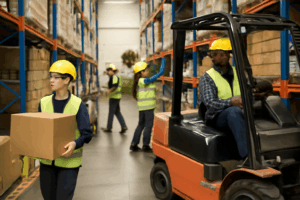
The holiday season is a time of increased demand for nearly every industry, and warehouses are no exception. Businesses in Central PA, particularly in Lancaster, Dauphin, and Cumberland Counties, experience a surge in activity as they strive to fulfill orders for consumers gearing up for the holiday shopping season. Retail giants and e-commerce companies that rely on warehouse distribution centers often hire seasonal workers to meet this demand.
Warehouse rushes are characterized by fast-moving work environments, long hours, and tight deadlines. Seasonal employees, often unfamiliar with the warehouse’s layout, processes, or safety protocols, are pushed to keep pace with seasoned workers. This often results in high-pressure situations that increase the risk of accidents.
“Highly Recommended” is the epitome of an understatement when it comes to the firm of McDonald At Law!! Michael McDonald’s genuine pleasant, and empathetic demeanor masks his legal astuteness, and the level of aggressiveness he implements in pursuit of a victim’s right and the monetary compensation legally entitled to us. I was involved in a motor vehicle accident at the hands of an intoxicated driver in York County. In my case I suffered what I described as an atypical injury, Mr. McDonald offered to be my Lawyer immediately after explaining to him the events leading to and after being struck in turn causing me to have a heart attack, when another law firm seemed hesitant. McDonald At Law secured a sizable monetary compensation that not only met my expectation but exceeded it. Mr. McDonald’s wealth of experience, and legal prowess is priceless and never did he act as the case was beneath his practice. In the end my family and I were well compensated, but also felt justified. Thank you McDonald At Law!!
- Miguel Lopez
Forklift Injuries: A Major Safety Concern in Warehouses
Among the most dangerous elements in any warehouse is the use of forklifts. These powerful machines, which are essential for moving heavy loads quickly, present a significant risk to both operators and bystanders. In the rush of the holiday season, forklifts are often operating at full capacity, making the risk of accidents higher. Common forklift-related injuries include crushing accidents, tip-overs, and collisions with other workers or warehouse structures. Injuries from forklift accidents can be severe and may include:- Crushed limbs or body parts
- Head injuries, including traumatic brain injuries (TBI)
- Spinal injuries
- Internal organ damage
Related Videos
Putting off an Attorney due to Cost
Choosing a Personal Injury Attorney
What Are Third-Party Injury Claims? Understanding the Legal Nuances
When an employee is injured on the job, workers’ compensation is typically the first line of defense, providing coverage for medical expenses, lost wages, and rehabilitation. However, there are instances where a third party may be responsible for the injury, and in these cases, the injured worker may be entitled to pursue additional compensation through a third-party injury claim. A third-party claim allows workers to seek compensation beyond the benefits provided by workers’ compensation. This can include situations where the injury was caused by the negligence of someone outside of the direct employer-employee relationship. For example, if a worker is injured due to faulty equipment or the negligence of a contractor, they may have grounds to file a third-party claim against the manufacturer or the contractor responsible for the accident. Some of the common scenarios where third-party claims may apply in warehouse environments include:- Defective Equipment: If a forklift or other warehouse equipment malfunctions due to a design flaw, improper maintenance, or manufacturer defect, the worker may be able to file a claim against the manufacturer or maintenance provider.
- Negligent Contractors or Vendors: Warehouses often hire third-party contractors for services such as cleaning, maintenance, or security. If one of these contractors is responsible for an accident due to negligence or failure to meet safety standards, the injured worker can pursue a claim against the contractor.
- Slip and Fall Accidents: Temporary workers unfamiliar with the warehouse environment are more likely to be involved in slip-and-fall accidents. If these accidents are caused by hazards such as wet floors, improperly stored materials, or poorly designed warehouse layouts, injured workers may have a case for third-party liability.
The Benefits of Third-Party Claims: More Than Just Workers’ Comp
While workers’ compensation is essential for covering basic medical expenses and lost wages, it does not address all the potential financial burdens of a serious injury. Third-party claims can provide compensation for additional damages that workers’ compensation does not cover, including:Verdicts & Settlements
- Pain and Suffering: Workers’ compensation typically does not cover the physical and emotional pain associated with a serious injury. Third-party claims, however, can allow injured workers to seek compensation for these non-economic damages.
- Lost Wages Beyond Workers’ Comp: Workers’ compensation only covers a portion of lost wages, and in some cases, it may not cover the full salary lost during the recovery period. Third-party claims can help workers recover the total amount of income they lost as a result of the injury.
- Future Medical Expenses: Workers’ compensation typically covers medical expenses related to the injury, but if the worker requires long-term care or rehabilitation, these costs may exceed what workers’ comp covers. Third-party claims can help ensure that injured workers receive the compensation needed for future medical treatment.
- Permanent Disability: If a worker is permanently disabled due to an injury, workers’ compensation may provide some benefits, but a third-party injury claim may offer additional compensation to help cover the lifelong costs of living with a disability.