


What is Limited Tort Insurance? 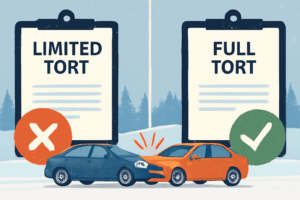
Limited tort insurance is often seen as the more affordable option for car insurance in Pennsylvania. It reduces the scope of your legal right to pursue compensation for pain and suffering after an accident. Essentially, if you choose limited tort coverage, you can still receive compensation for medical bills, lost wages, and other economic losses if you’re injured in an accident. However, when it comes to non-economic damages, like pain and suffering, limited tort severely restricts your ability to claim unless you meet specific criteria.
Under limited tort, you can only claim pain and suffering if the injury sustained meets the “serious injury” threshold defined by law. This means that minor injuries, like soft tissue damage or whiplash, may not be eligible for compensation under this type of coverage. This becomes a significant concern during the winter months when accidents are more likely to occur. With the harsh road conditions, you may experience a variety of injuries that do not qualify as serious by the legal standard, potentially leaving you without a means to recover for your pain and suffering.
“Highly Recommended” is the epitome of an understatement when it comes to the firm of McDonald At Law!! Michael McDonald’s genuine pleasant, and empathetic demeanor masks his legal astuteness, and the level of aggressiveness he implements in pursuit of a victim’s right and the monetary compensation legally entitled to us. I was involved in a motor vehicle accident at the hands of an intoxicated driver in York County. In my case I suffered what I described as an atypical injury, Mr. McDonald offered to be my Lawyer immediately after explaining to him the events leading to and after being struck in turn causing me to have a heart attack, when another law firm seemed hesitant. McDonald At Law secured a sizable monetary compensation that not only met my expectation but exceeded it. Mr. McDonald’s wealth of experience, and legal prowess is priceless and never did he act as the case was beneath his practice. In the end my family and I were well compensated, but also felt justified. Thank you McDonald At Law!!
- Miguel Lopez
How Limited Tort Affects Winter Car Accident Claims
During winter, the risk of sliding on ice, colliding with snowbanks, or rear-ending another vehicle increases significantly. Accidents in these conditions can lead to injuries that may not be immediately apparent, like back pain, muscle strain, or concussions, which often do not meet the serious injury requirement for limited tort. While you could still be entitled to economic compensation, the limitations placed on your ability to recover for pain and suffering could significantly reduce your potential compensation. For instance, if you are involved in a minor fender bender in icy conditions and suffer from neck or back pain, you may not be able to claim for emotional distress or long-term discomfort unless your injury is classified as serious. This limitation can be frustrating and financially burdensome, especially if you are facing long recovery periods from injuries that have a lasting effect on your quality of life.What is Full Tort Insurance?
Full tort insurance, in contrast, offers a much broader range of protection. With full tort coverage, you are not restricted by the “serious injury” requirement that applies to limited tort insurance. This means that you can pursue compensation for pain and suffering regardless of the severity of your injury. Whether you suffer from a severe injury like a broken bone or a less noticeable injury, such as whiplash or psychological trauma, you are entitled to seek damages for both economic and non-economic losses. Full tort insurance provides the peace of mind that, no matter the nature of your injuries, you can claim for compensation for pain and suffering. This coverage is especially important during the winter months when accidents can involve a wide range of injuries, some of which may be difficult to immediately diagnose or classify as serious.Related Videos
Putting off an Attorney due to Cost
Choosing a Personal Injury Attorney
The Benefits of Full Tort Insurance During Winter Accidents
The winter season brings about more than just icy roads—it also introduces the possibility of accidents caused by poor visibility and hazardous weather conditions. In these situations, injuries may not always be severe but can still have a significant impact on your day-to-day life. With full tort insurance, you can pursue compensation for injuries that may not have caused permanent damage but still lead to pain, discomfort, and a reduction in your quality of life. For example, you may experience severe bruising or muscle strains after a minor accident in snowy weather. Though these injuries might not qualify under the limited tort system, full tort insurance allows you to seek compensation for the pain and suffering caused by these conditions. Similarly, mental health conditions, like anxiety or depression following a crash, can also be considered for compensation under full tort insurance, even if the physical injuries sustained are not severe.Comparing Full Tort vs. Limited Tort for Winter Car Accidents
While full tort insurance provides a more extensive level of protection, it comes at a higher premium than limited tort insurance. Choosing between the two often comes down to balancing the higher costs of full tort with the more limited protection of limited tort. The decision becomes particularly significant when considering the increased risk of car accidents in the winter months.- Cost: Full tort insurance generally comes with higher premiums compared to limited tort. However, for those who want broader protection and peace of mind, the additional cost may be worthwhile.
- Compensation: Full tort insurance allows for greater flexibility in seeking compensation for a wider range of injuries, including those that may not be deemed “serious.” This becomes especially important in winter accidents when injuries might not always be immediately apparent but could still be life-altering.
- Pain and Suffering: Limited tort limits compensation for pain and suffering unless your injuries meet the “serious injury” threshold. Full tort removes these restrictions, allowing for a more comprehensive recovery of damages.
When to Choose Full Tort Insurance
Opting for full tort insurance can be a wise choice if you want the flexibility to claim compensation for a broader range of injuries, especially for the pain and suffering that can result from an accident. Given the unpredictable nature of winter driving, full tort insurance provides a stronger safety net in cases where injuries may not be severe but still have lasting effects. If you’re concerned about the possibility of long-term or recurring pain from an injury, such as whiplash or joint pain from a winter accident, full tort coverage ensures you can recover damages for these types of conditions. Furthermore, full tort allows you to pursue compensation for emotional distress or trauma, which may be a factor in accidents where road conditions are especially dangerous.Verdicts & Settlements
When Limited Tort Insurance Might Be Enough
Limited tort insurance may be a suitable option for those who are primarily concerned with keeping their insurance premiums lower and are willing to accept the limitations it places on their ability to recover for pain and suffering. If you’re a safe driver with a relatively low likelihood of being involved in a serious accident, limited tort can help you save on your premium while still providing coverage for economic losses like medical expenses and lost wages. However, it’s essential to weigh the potential cost savings against the risk of not being able to fully recover for non-economic damages, especially if an accident occurs in winter conditions that increase the risk of injuries that may not meet the serious injury criteria.Making the Right Decision for Your Winter Driving
The decision between full tort and limited tort insurance depends on your individual circumstances, driving habits, and how much risk you’re willing to take. If you frequently drive in challenging conditions, such as icy roads during winter months, full tort insurance offers a broader safety net, ensuring you’re fully protected if an accident occurs. On the other hand, if you rarely experience accidents and are more concerned with minimizing your insurance costs, limited tort insurance can provide sufficient coverage while still offering affordable premiums. Just be sure to carefully consider the limitations of this coverage, especially during winter, when accidents are more common and can result in injuries that may not be covered under limited tort.Key Takeaways:
- Full Tort: Offers the ability to seek compensation for pain and suffering regardless of injury severity, making it a more comprehensive option for winter accidents.
- Limited Tort: Has a lower premium but restricts compensation for pain and suffering unless the injury meets the serious injury threshold.
- Winter driving, with its increased risks, can make full tort insurance a safer and more comprehensive option for protection.
- Carefully evaluate your budget, driving habits, and the potential for accidents when choosing between full tort and limited tort coverage.