Deer-related car accidents in Lancaster County can involve more than vehicle damage. A direct collision with a deer is generally handled under a driver’s comprehensive coverage, subject to the policy terms and deductible. A crash caused by swerving, sudden braking, or another driver’s unsafe reaction can raise separate questions about collision coverage, liability, and personal injury claims. Deer activity increases during the fall breeding season, and deer are especially active between sunset and sunrise. If you are injured in a serious deer-related crash in Lancaster, Pennsylvania, the facts may require a close review of insurance coverage, fault, medical evidence, and Pennsylvania injury law.



Why Deer-Related Crashes Are a Fall Concern in Lancaster County 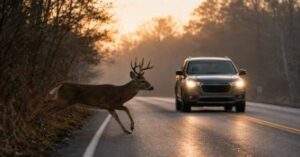
Lancaster County includes busy highways, suburban roads, farmland, wooded areas, and rural routes where deer can enter traffic with little warning. Fall creates added risk because deer move more during breeding season and may travel farther while looking for mates.
Pennsylvania transportation officials warn that deer activity increases in autumn and that deer are most active between sunset and sunrise. Drivers on US Route 30, US Route 222, PA Route 283, and other Lancaster County roads should stay alert, especially during morning and evening travel.
If you see one deer, watch for others. Deer often move in small groups. Slowing down, increasing following distance, scanning the roadway and shoulders, wearing a seat belt, and keeping your attention on traffic can give you more time to react.
What Should You Do If a Deer Enters the Road?
Your first goal is to keep control of your vehicle. A sharp swerve can turn an animal encounter into a rollover, a roadside impact, a head-on collision, or a crash with another vehicle.
When a deer appears ahead:
- Slow down and prepare to stop.
• Brake firmly while keeping the vehicle under control when conditions allow.
• Avoid a sharp swerve that could send your vehicle into another lane or off the roadway.
• Watch for additional deer behind the first.
• Use added caution in low light and on wet or leaf-covered pavement.
No single response can prevent every deer collision. Traffic, speed, visibility, road conditions, and the animal’s location can all affect how much time you have to react.
“Highly Recommended” is the epitome of an understatement when it comes to the firm of McDonald At Law!! Michael McDonald’s genuine pleasant, and empathetic demeanor masks his legal astuteness, and the level of aggressiveness he implements in pursuit of a victim’s right and the monetary compensation legally entitled to us. I was involved in a motor vehicle accident at the hands of an intoxicated driver in York County. In my case I suffered what I described as an atypical injury, Mr. McDonald offered to be my Lawyer immediately after explaining to him the events leading to and after being struck in turn causing me to have a heart attack, when another law firm seemed hesitant. McDonald At Law secured a sizable monetary compensation that not only met my expectation but exceeded it. Mr. McDonald’s wealth of experience, and legal prowess is priceless and never did he act as the case was beneath his practice. In the end my family and I were well compensated, but also felt justified. Thank you McDonald At Law!!- Miguel Lopez
What to Do After a Deer-Related Car Accident
After your vehicle stops, check yourself and your passengers for injuries. Move out of active traffic when the vehicle can be moved safely. Turn on your hazard lights. Call 911 when someone is injured, the vehicle cannot be driven safely and requires towing, traffic is blocked, or the scene creates an immediate safety risk.
Pennsylvania law requires a driver to give immediate notice to police when a crash involves injury or death, or when vehicle damage prevents the vehicle from being driven safely in its customary manner and towing is required.
Do not approach an injured deer. A frightened animal can move suddenly and create another hazard.
If your condition allows, document the scene. Photograph vehicle damage, debris, the roadway, lighting, nearby signs, lane positions, and damage to any other vehicle or roadside object. If another driver is involved, exchange identification and insurance information and collect witness contact information.
For a checklist of information to gather after a crash, visit:
https://mcdonaldatlaw.com/what-information-should-you-collect-after-an-accident/
Seek medical evaluation if you develop pain, dizziness, stiffness, headache, numbness, confusion, or other symptoms after the collision. Some crash-related injuries can have delayed symptoms.
Read more:
https://mcdonaldatlaw.com/some-crash-injuries-might-not-always-manifest-immediate-symptoms/
Putting off an Attorney due to Cost Choosing a Personal Injury AttorneyRelated Videos
Who Pays for Damage When You Hit a Deer?
In Pennsylvania, comprehensive auto coverage generally applies to vehicle damage caused by directly striking a deer, subject to the policy terms and deductible. Comprehensive coverage is optional, although a lender or leasing company may require it.
If you avoid the deer but strike a guardrail, tree, pole, or another vehicle, the vehicle damage may fall under collision coverage instead. The policy language and the facts of the loss control which coverage applies.
Pennsylvania insurance guidance treats a crash involving a deer or other wildlife as a not-at-fault incident for insurance rating purposes. That rule does not resolve every liability question when another driver is involved in the same crash.
Can Another Driver Be Responsible for a Deer-Related Crash?
Yes. A deer may create the emergency, but another driver’s conduct can still cause or worsen a collision.
For example, a deer may enter your lane and force you to slow or stop. If a driver behind you is following too closely, looking at a phone, or traveling too fast to stop safely and rear-ends your vehicle, that driver’s conduct may become a central issue in an injury claim.
Other examples can include:
- A driver swerves across the center line and strikes an oncoming vehicle.
• A driver changes lanes abruptly without checking for nearby traffic.
• A motorist travels too fast for darkness, rain, fog, or limited sight distance.
• A driver loses control and forces another vehicle off the road.
Pennsylvania follows a modified comparative negligence rule. You may recover damages when your negligence is not greater than the negligence of the defendant or defendants from whom you seek recovery. Any recovery is reduced in proportion to the percentage of negligence assigned to you.
A careful investigation may be necessary when an insurer focuses only on the deer and does not examine following distance, speed, distraction, lane position, braking, vehicle damage, witness accounts, or other evidence.
A deer may trigger the emergency, but another driver’s negligence may still support an injury claim.
For more information about Lancaster County car accident representation, visit:
https://mcdonaldatlaw.com/lancaster-county-car-accident-lawyers/
Verdicts & Settlements
What Insurance May Cover Injuries?
Pennsylvania auto insurance can involve several separate coverages after a deer-related crash.
Medical benefits coverage pays covered medical bills for you and others covered by your policy, regardless of who caused the collision, up to the applicable policy limit. If another driver’s negligence caused or contributed to the crash, that driver’s bodily injury liability coverage may apply to additional covered losses.
Uninsured or underinsured motorist coverage may also matter when a negligent driver has no liability insurance or does not have enough insurance to cover the injuries, depending on the coverage selected and the policy terms.
Pennsylvania drivers also choose between full tort and limited tort options. That choice can affect the right to recover certain non-economic damages after a motor vehicle accident, subject to statutory exceptions and the facts of the claim.
Learn more about these choices:
https://mcdonaldatlaw.com/limited-v-full-tort-insurance-what-is-the-difference/
What Compensation May Be Available When Another Driver Is at Fault?
When another person’s negligence causes a deer-related collision, an injury claim may include losses supported by the evidence and recoverable under Pennsylvania law. Depending on the circumstances, those losses may include:
- Medical expenses.
• Lost income.
• Reduced earning capacity.
• Property damage.
• Pain and suffering.
• Other accident-related losses supported by the evidence.
The value of a claim depends on the injuries, medical documentation, effect on work and daily activities, available insurance, and allocation of fault. Keep medical records, wage information, repair estimates, towing records, insurance documents, photographs, and other materials related to the crash.
How Long Do You Have to Bring an Injury Claim?
Pennsylvania generally requires negligence actions seeking damages for personal injuries to be filed within two years. Different rules or shorter notice periods can apply in some cases, including certain claims involving government units.
Waiting can make evidence harder to preserve. Dashcam files may be overwritten, vehicles may be repaired, roadside conditions may change, and witnesses may become harder to locate.
For more information about steps to take after a collision, visit:
https://mcdonaldatlaw.com/what-steps-should-you-take-after-a-car-accident/
Frequently Asked Questions About Deer-Related Crashes
Is Hitting a Deer Automatically My Fault?
No. Pennsylvania insurance guidance treats a collision involving deer or other wildlife as a not-at-fault incident. Fault can still become an issue when another vehicle is involved or when a driver’s conduct contributes to a separate collision.
Should I Swerve to Avoid a Deer?
A sharp swerve can cause a loss of control, a roadside collision, or a crash with another vehicle. Pennsylvania driver-training guidance advises drivers who cannot stop for an animal not to swerve because swerving can send a vehicle into oncoming traffic or off the road. Slow down, prepare to stop, and maintain control of the vehicle.
Do I Need a Lawyer After Every Deer Collision?
No. A property-damage-only claim with clear insurance coverage may not require legal representation. Legal advice may become more useful when someone is injured, another driver contributed to the crash, fault is disputed, insurance coverage is unclear, or the losses are substantial.
What If Another Driver Says the Deer Made the Crash Unavoidable?
A deer entering the road does not automatically resolve whether another driver acted reasonably. Evidence may show whether the driver maintained adequate following distance, traveled at a reasonable speed, stayed in the proper lane, remained attentive, and reacted appropriately to the conditions.
Speak With a Lancaster Car Accident Attorney
A serious deer-related crash can leave you dealing with injuries, vehicle damage, missed work, and several insurance questions at the same time. McDonald At Law represents accident victims in Lancaster, Pennsylvania, and nearby areas. The firm can review how the collision happened, identify potentially available insurance coverage, preserve relevant evidence, and explain the legal options that may apply.
Michael P. McDonald is a nationally board-certified civil trial specialist, and the firm represents accident victims rather than insurance companies.
Call 717-899-1907 to request a consultation.
You can also contact the firm here:
https://mcdonaldatlaw.com/contact-us/
This article is for informational purposes only and does not constitute legal advice. Consult an attorney about your specific situation.

 |

 |