
Earlier darkness can affect a car accident claim because reduced visibility may become part of the investigation into fault. Drivers may have less time to recognize stopped vehicles, pedestrians, cyclists, intersections, lane changes, or hazards near the roadway after sunset. Pennsylvania law also requires drivers to use appropriate vehicle lighting under specified conditions, which can make headlights, taillights, brake lights, and other evidence relevant after a crash.
If you were injured in Lancaster, Pennsylvania, the fact that a collision happened after dark does not automatically establish who was responsible. McDonald At Law can review how visibility, driver behavior, vehicle lighting, insurance coverage, and Pennsylvania negligence law may affect your claim.
Key point: Darkness can affect the evidence in a car accident claim, but darkness does not determine fault by itself.
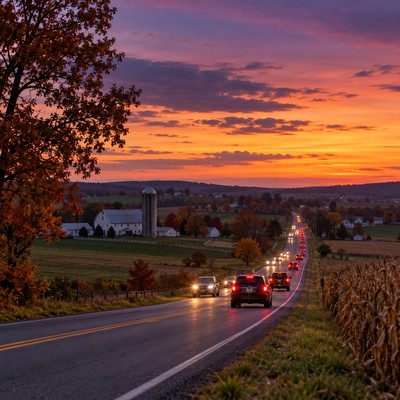


Earlier Darkness Does Not Automatically Determine Fault
As sunset arrives earlier in Pennsylvania during fall and winter, routine afternoon and evening trips may take place in low-light conditions. A commute that occurred in daylight during summer may happen near dusk or after sunset later in the year.
The change in visibility can matter after a collision, but darkness alone does not establish negligence.
Car accident claims generally require a review of how each driver behaved before the crash. A central question is whether someone failed to use reasonable care under the circumstances and whether that conduct caused or contributed to injuries.
When visibility is reduced, investigators may examine whether a driver:
Used headlights when required
Maintained a safe speed for the conditions
Left sufficient following distance
Watched for pedestrians and cyclists
Responded appropriately to traffic signals and brake lights
Checked mirrors and blind spots before changing lanes
Avoided distractions
Maintained working headlights, taillights, brake lights, and turn signals
If you were injured in a local collision, you can learn more about legal options at:
https://mcdonaldatlaw.com/lancaster-county-car-accident-lawyers/
“Highly Recommended” is the epitome of an understatement when it comes to the firm of McDonald At Law!! Michael McDonald’s genuine pleasant, and empathetic demeanor masks his legal astuteness, and the level of aggressiveness he implements in pursuit of a victim’s right and the monetary compensation legally entitled to us. I was involved in a motor vehicle accident at the hands of an intoxicated driver in York County. In my case I suffered what I described as an atypical injury, Mr. McDonald offered to be my Lawyer immediately after explaining to him the events leading to and after being struck in turn causing me to have a heart attack, when another law firm seemed hesitant. McDonald At Law secured a sizable monetary compensation that not only met my expectation but exceeded it. Mr. McDonald’s wealth of experience, and legal prowess is priceless and never did he act as the case was beneath his practice. In the end my family and I were well compensated, but also felt justified. Thank you McDonald At Law!!
- Miguel Lopez
Why Visibility Can Matter in a Car Accident Claim
Visibility affects how quickly a driver can identify a hazard and react.
At dusk, the sky may still appear bright while vehicles, pedestrians, roadway edges, and other objects become harder to distinguish. Glare from approaching headlights may also affect what a driver can see once natural light begins fading.
These conditions can make driver conduct especially relevant.
For example, imagine that a driver approaches stopped traffic after sunset and crashes into the rear of another vehicle. The following driver may claim that the vehicle ahead had defective brake lights. The other driver may argue that the following motorist was driving too quickly, following too closely, or failing to pay attention.
Determining what happened requires more than noting that the crash occurred at night.
Photographs, vehicle inspections, witness statements, police observations, video recordings, roadway lighting, and vehicle damage may help establish what each driver could reasonably have seen and how each driver responded.
For more information about rear-end collisions, visit:
https://mcdonaldatlaw.com/pennsylvania-rear-end-motor-vehicle-accidents-a-real-threat/
Pennsylvania Vehicle Lighting Rules May Affect the Investigation
Pennsylvania law requires motorists to use vehicle lighting between sunset and sunrise. Lighting is also required in certain conditions involving limited visibility, and Pennsylvania law includes additional requirements connected with windshield-wiper use during precipitation.
The time of a collision can therefore become relevant evidence.
Investigators may compare the documented crash time with sunset information for that date. They may also examine whether headlights were operating and whether taillights, brake lights, and turn signals were visible.
A lighting problem does not necessarily decide the claim by itself.
A vehicle may have had a defective taillight, for example, but investigators would still need to determine whether that defect contributed to the crash. Another driver's speed, distraction, unsafe lane change, failure to yield, or failure to maintain sufficient following distance may also be relevant.
A complete investigation should examine the circumstances that contributed to the collision instead of focusing on one detail.
How Earlier Darkness Can Affect Comparative Negligence
Pennsylvania follows a modified comparative negligence rule.
Under 42 Pa.C.S. § 7102, an injured person may recover damages when that person's share of causal negligence is not greater than the combined causal negligence of the defendant or defendants from whom recovery is sought. Any recovery may then be reduced according to the injured person's percentage of responsibility.
This rule can become relevant when both sides dispute what happened in a low-light collision.
Consider a crash involving a left turn at dusk.
One driver may argue that the approaching vehicle was difficult to see because its headlights were not illuminated. The approaching driver may argue that the turning motorist failed to yield or misjudged the distance or speed of the approaching vehicle.
Both allegations may require investigation.
Insurance companies and attorneys may examine:
Whether headlights were illuminated
The position of both vehicles
Vehicle speed
Turn signals
Roadway lighting
Witness observations
Available surveillance footage
Physical vehicle damage
Police findings
Statements made after the crash
Assigning fault only because the collision happened after dark can overlook evidence that explains how the crash actually occurred.
Verdicts & Settlements
Evidence Can Be Especially Valuable After a Dusk or Nighttime Crash
Documentation can help preserve what the accident scene looked like before vehicles are moved, debris is cleared, or lighting conditions change.
If your injuries and the surrounding conditions allow you to do so safely, photographs taken shortly after the collision may be useful.
Pictures may capture:
Streetlights
Headlights and taillights
Lane markings
Traffic signals
Intersections
Nearby buildings
Road shoulders
Vehicle positions
Impact damage
Weather conditions
Pavement conditions
Video may also be valuable.
Businesses, homes, traffic systems, dashboard cameras, and doorbell cameras may have recorded the collision or the moments before it. Some systems overwrite recordings after a limited period, so preserving potential footage may be time-sensitive.
Witness information can also help. A person who observed the vehicles before impact may remember whether headlights were illuminated, whether a vehicle appeared to be speeding, or whether a driver made a sudden maneuver.
For more information about what to collect after a collision, visit:
https://mcdonaldatlaw.com/what-information-should-you-collect-after-an-accident/
Medical Evidence Still Matters Regardless of Lighting Conditions
Visibility may affect the question of fault, but an injury claim also requires documentation of the harm caused by the collision.
Some injuries are immediately apparent. Other symptoms may become more noticeable in the hours or days after a crash.
Medical records can help document injuries, symptoms, diagnostic testing, physical limitations, prescriptions, referrals, treatment, and follow-up care. Those records may also help establish the relationship between the collision and the medical care that followed.
If you experience pain, dizziness, numbness, weakness, headaches, or other concerning symptoms after a collision, seek appropriate medical attention.
For more information about delayed symptoms after a crash, visit:
https://mcdonaldatlaw.com/some-crash-injuries-might-not-always-manifest-immediate-symptoms/
Insurance Coverage Can Shape a Pennsylvania Car Accident Claim
Liability is only one part of a Pennsylvania car accident case.
Insurance coverage may influence what benefits and compensation are available. Pennsylvania automobile policies may involve first-party medical benefits, liability coverage, uninsured motorist coverage, underinsured motorist coverage, and tort selections.
Full tort and limited tort elections may also affect the types of damages an injured person can pursue, depending on the circumstances and any applicable exceptions.
For an explanation of these insurance options, visit:
https://mcdonaldatlaw.com/limited-v-full-tort-insurance-what-is-the-difference/
An attorney reviewing a crash may examine the injured person's policy, the other driver's policy, and any other coverage that may apply.
Common Low-Light Accident Scenarios in Lancaster
Earlier sunsets can affect many types of crashes in Lancaster, Pennsylvania, and nearby areas.
Examples may include:
A driver who does not notice a pedestrian entering a crosswalk after daylight fades
A motorist who changes lanes and overlooks another vehicle in an area with limited roadway lighting
A driver who approaches an intersection and misjudges the distance or speed of another vehicle
A rear-end collision involving disputes about brake lights, speed, distraction, or following distance
A crash involving a cyclist who is difficult to see against headlights, signs, parking lot lighting, or shadows
Each collision requires a fact-specific review.
The relevant issue is not simply whether visibility was reduced. The question is whether the people involved acted reasonably under the conditions and whether negligent conduct caused or contributed to the crash.
What to Do After a Crash in Darkness
Safety should come first after any collision.
Call emergency services when someone is injured, traffic is obstructed, or police assistance is needed. Seek medical care for injuries or concerning symptoms.
When circumstances permit, document the scene before conditions change.
You may consider taking the following steps:
Photograph the vehicles from several angles
Capture headlights, taillights, and brake lights
Photograph roadway lighting and traffic signals
Document lane markings, signs, and nearby intersections
Photograph vehicle damage and debris
Record weather and pavement conditions
Exchange contact and insurance information
Obtain witness contact information
Preserve dash camera recordings
Avoid guessing about the cause of the collision
Statements made immediately after a crash may later become part of an insurance investigation. Stick to facts that you personally observed.
How a Lancaster Car Accident Lawyer Can Help
A car accident involving darkness may require more investigation than a statement that one driver did not see another vehicle, pedestrian, cyclist, or roadway hazard.
An attorney can examine why something was not seen and whether a driver should reasonably have identified it sooner under the circumstances.
That work may include:
Reviewing police reports
Preserving video evidence
Locating and interviewing witnesses
Examining vehicle lighting
Reviewing insurance policies
Documenting injuries and treatment
Evaluating comparative negligence allegations
Communicating with insurance companies
McDonald At Law represents injured people in Lancaster, Pennsylvania, and nearby areas. The firm offers consultations at no charge for car accident matters.
Speak With a Lancaster Car Accident Attorney
If you were injured in a collision at dusk or after dark, lighting conditions may be only one part of your claim. Evidence involving driver conduct, vehicle lighting, speed, roadway conditions, injuries, and insurance coverage may all affect how responsibility is evaluated.
McDonald At Law can review the circumstances of your Lancaster, Pennsylvania accident and explain the legal options that may apply.
Contact McDonald At Law online:
https://mcdonaldatlaw.com/contact-us/
This article is for informational purposes only and is not legal advice. Consult an attorney about your specific situation.