Pedestrian safety in Lancaster, Pennsylvania, is a serious concern, especially during the busy spring months when more residents are walking to work, shopping centers, and local attractions. McDonald At Law provides guidance for those injured in parking lots and crosswalks, helping victims understand when a driver can be held responsible for negligence. Pennsylvania law ensures that pedestrians who are harmed due to a driver’s careless actions may pursue compensation for medical expenses, lost income, and other damages. These cases can be complex, requiring a clear understanding of liability, negligence, and the rights of both pedestrians and drivers under state law.



In Pennsylvania, drivers are legally required to exercise reasonable care at all times. This duty extends not only to operating vehicles safely on streets and highways but also in private and commercial parking lots. Drivers must remain vigilant for pedestrians, obey posted speed limits, and yield at crosswalks. Breaches of these duties—such as failing to stop at a marked crosswalk or reversing without checking for pedestrians—can establish liability. The key factor is whether the driver’s actions directly caused the pedestrian’s injuries and whether the harm was reasonably foreseeable.
Elements Required to Establish Liability 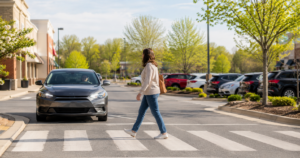
To hold a driver liable in Pennsylvania, four legal elements generally must be established. First, there must be a duty of care. Drivers inherently owe a duty to pedestrians to act reasonably and safely, particularly in areas where pedestrian traffic is expected. Second, a breach of duty must occur. This happens when a driver’s conduct falls below the standard of care expected under the circumstances, such as ignoring stop signs, speeding in congested areas, or failing to check blind spots in parking lots. Third, causation must be proven, meaning the breach of duty must directly result in the pedestrian’s injury. Finally, damages must be present, which can include immediate medical costs, long-term rehabilitation, lost wages, pain and suffering, and emotional distress. Demonstrating these elements often involves eyewitness testimony, police reports, surveillance footage, and medical documentation.
Risks in Parking Lots
Parking lots are deceptively hazardous locations for pedestrians. Unlike streets, where drivers generally anticipate pedestrian crossings at intersections, parking lots often have unpredictable traffic patterns and limited visibility. Drivers reversing out of tight spaces without checking behind their vehicles, distracted driving while looking for a parking spot, and speeding through drive aisles are common causes of pedestrian injuries. Large vehicles, such as SUVs or delivery trucks, may further obstruct a driver’s view, increasing the risk of collisions. Additionally, poorly maintained parking lots with uneven surfaces, potholes, or icy patches can exacerbate the severity of injuries when accidents occur. Pedestrians must remain cautious, but drivers are legally responsible for anticipating the presence of pedestrians in these shared spaces.
“Highly Recommended” is the epitome of an understatement when it comes to the firm of McDonald At Law!! Michael McDonald’s genuine pleasant, and empathetic demeanor masks his legal astuteness, and the level of aggressiveness he implements in pursuit of a victim’s right and the monetary compensation legally entitled to us. I was involved in a motor vehicle accident at the hands of an intoxicated driver in York County. In my case I suffered what I described as an atypical injury, Mr. McDonald offered to be my Lawyer immediately after explaining to him the events leading to and after being struck in turn causing me to have a heart attack, when another law firm seemed hesitant. McDonald At Law secured a sizable monetary compensation that not only met my expectation but exceeded it. Mr. McDonald’s wealth of experience, and legal prowess is priceless and never did he act as the case was beneath his practice. In the end my family and I were well compensated, but also felt justified. Thank you McDonald At Law!!- Miguel Lopez
Crosswalk Safety and Liability Considerations
Crosswalks serve as designated zones for pedestrians and provide critical legal protections. In Pennsylvania, drivers must yield the right-of-way to pedestrians in marked crosswalks. Failure to do so constitutes a breach of duty and may support a negligence claim. Even when crosswalks are unmarked, pedestrians can retain limited legal protections if the area is commonly used for crossing and the pedestrian’s presence is reasonably foreseeable. Comparative negligence applies in Pennsylvania, meaning a pedestrian’s own conduct is evaluated relative to the driver’s. Even if a pedestrian is partially at fault—for example, failing to look both ways—their recovery may not be entirely barred. The degree of fault is typically assigned as a percentage and reduces compensation accordingly.
Documenting Incidents
Proper documentation after a pedestrian accident is essential for protecting legal rights. Victims should take photographs of the accident scene, including the crosswalk or parking lot layout, vehicle damage, and any visible hazards. Collecting witness statements, including names and contact information, provides corroborating accounts of the incident. Medical records should be preserved to document injuries, treatment, and ongoing care requirements. When available, police reports provide an objective record and can be instrumental in establishing liability. Each of these steps strengthens a case and can influence settlement negotiations or court outcomes.
Putting off an Attorney due to Cost Choosing a Personal Injury AttorneyRelated Videos
How Legal Counsel Assists Pedestrians
Experienced attorneys, such as those at McDonald At Law, guide pedestrians through the legal process, ensuring evidence is properly collected and claims are accurately presented. Legal counsel can investigate accidents thoroughly, negotiate with insurance companies, assess comparative negligence, and advise on the likelihood of a successful claim. In cases where settlement is not reached, an attorney can represent the pedestrian in court. Legal professionals are also valuable for identifying additional avenues for recovery, including claims against property owners in parking lot accidents when unsafe conditions contributed to the injury.
Real-World Examples
Consider a pedestrian struck while walking through a busy supermarket parking lot. The driver, attempting to reverse into a tight space, fails to see the pedestrian and causes injury. In this scenario, liability arises from the driver’s negligence in failing to check the rearview and surrounding area before moving. In another example, a pedestrian crossing at a marked crosswalk outside a local grocery store may be hit by a driver who fails to yield. Even if the driver claims limited visibility due to sun glare, Pennsylvania law evaluates the foreseeability of the pedestrian’s presence and the reasonableness of the driver’s response. Both situations may warrant legal action and potential compensation.
Verdicts & Settlements
Preventive Measures for Pedestrians
While legal protections exist, pedestrians can also take proactive measures to reduce risks. Using marked crosswalks, avoiding distractions such as smartphones while walking, and making eye contact with drivers before crossing are key practices. Wearing visible clothing, particularly in low-light conditions, can further enhance safety. Reporting hazardous conditions in parking lots to property management ensures that both pedestrians and drivers are alerted to potential dangers. However, even with these precautions, liability still rests primarily with drivers who fail to exercise reasonable care.
Understanding Comparative Negligence
Pennsylvania applies a comparative negligence system in personal injury cases. This means that if a pedestrian contributes to the accident, their compensation may be reduced in proportion to their degree of fault. For instance, if a pedestrian is found 20% at fault for failing to look before crossing, any awarded damages would be reduced by 20%. Legal counsel can evaluate these factors and advise on strategies to maximize recovery while addressing any potential claims of shared fault by the driver.
Next Steps After an Accident
Immediately following an accident, pedestrians should seek medical attention, document the incident thoroughly, and contact experienced legal counsel. Early involvement of attorneys ensures that evidence is preserved, insurance communications are handled appropriately, and the pedestrian’s rights are protected. Attorneys can also help navigate the complexities of comparative negligence, premises liability, and insurance company negotiations, ensuring that victims receive fair and complete compensation.
Internal Resources for Pedestrian Safety in Lancaster
Pedestrians can access additional guidance on related topics through McDonald At Law’s resources:
- Understanding Lancaster County Pennsylvania Pedestrian Accident Laws
- Pedestrian Accidents in Central Pennsylvania: Urban vs. Rural Areas
- Steps to Take After a Car Accident in Lancaster
Conclusion
Pedestrian injuries in Pennsylvania, whether in crosswalks or parking lots, can have lasting physical, emotional, and financial impacts. Drivers have a legal obligation to exercise reasonable care, and violations of this duty can result in significant liability. McDonald At Law provides guidance, representation, and advocacy for pedestrians seeking fair compensation. Prompt legal consultation, thorough documentation, and understanding Pennsylvania’s comparative negligence rules are key to protecting your rights. Pedestrians should not face the burden alone, and experienced legal counsel can ensure that both accountability and compensation are pursued effectively.
Disclaimer
This content is for informational purposes only and is not legal advice. Consult an attorney about your specific situation.

 |


 |