
As temperatures rise and daylight hours increase, Lancaster and surrounding areas in Pennsylvania experience a notable surge in motorcycle activity. Spring events, rallies, and recreational rides draw both local enthusiasts and visiting riders to the roads. McDonald At Law has observed that this seasonal increase in motorcycle traffic correlates with a higher frequency of collisions, often involving drivers who claim they “did not see” the motorcyclist. Understanding how liability is established in these scenarios is essential for injured riders seeking fair compensation, and experienced legal guidance can be decisive in securing recovery for medical expenses, lost income, and other damages.



The primary reason for the uptick in spring motorcycle accidents is the convergence of higher traffic volumes and driver unfamiliarity. Roads that may be quiet in winter become congested with riders and vehicles during events such as local motorcycle rallies, charity rides, and seasonal tourism traffic. Drivers may be distracted by the scenery, navigating unfamiliar streets, or focusing on directions rather than actively scanning for motorcycles. Additionally, the combination of lingering winter debris, wet or gravelly roads, and rapidly changing weather conditions can increase accident risk, making attentive driving and rider visibility critical.
Understanding Liability When Drivers Claim They “Did Not See” the Motorcyclist 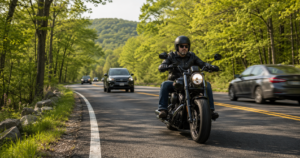
Pennsylvania law places a clear duty on all drivers to maintain a proper lookout and to operate their vehicles safely under the conditions present. A driver’s claim that they “did not see” a motorcyclist does not automatically absolve them of liability. Courts consider whether a reasonably prudent driver should have been able to observe the motorcycle and whether the rider took reasonable steps to remain visible. Factors influencing this assessment include lighting conditions, time of day, traffic density, road design, and whether the motorcyclist adhered to traffic regulations.
“Highly Recommended” is the epitome of an understatement when it comes to the firm of McDonald At Law!! Michael McDonald’s genuine pleasant, and empathetic demeanor masks his legal astuteness, and the level of aggressiveness he implements in pursuit of a victim’s right and the monetary compensation legally entitled to us. I was involved in a motor vehicle accident at the hands of an intoxicated driver in York County. In my case I suffered what I described as an atypical injury, Mr. McDonald offered to be my Lawyer immediately after explaining to him the events leading to and after being struck in turn causing me to have a heart attack, when another law firm seemed hesitant. McDonald At Law secured a sizable monetary compensation that not only met my expectation but exceeded it. Mr. McDonald’s wealth of experience, and legal prowess is priceless and never did he act as the case was beneath his practice. In the end my family and I were well compensated, but also felt justified. Thank you McDonald At Law!!- Miguel Lopez
Even when visibility is partially impaired, drivers are still responsible for adjusting their behavior to the conditions. For instance, if a motorcyclist is traveling on a well-lit street wearing a reflective helmet and clothing, with headlights on, a driver who fails to notice them may be found negligent. Pennsylvania’s comparative negligence system allows for shared responsibility, but drivers who entirely fail to observe a clearly visible motorcycle often bear the primary liability for resulting injuries.
Critical Evidence in Establishing Fault
Successful claims in motorcycle accidents rely on thorough documentation and evidence collection. The following types of evidence play a pivotal role in proving liability:
- Police reports and citations: Official documentation provides an objective record of the accident scene, vehicle positions, and cited violations.
- Photographs and videos: Visual evidence of skid marks, vehicle damage, intersection layouts, and environmental conditions can be crucial in reconstructing events.
- Eyewitness accounts: Testimony from pedestrians, passengers, or nearby drivers can confirm the motorcyclist’s visibility and behavior before the collision.
- Expert analysis: Accident reconstruction specialists can calculate impact points, speed, and angles, offering compelling proof against claims of invisibility.
- Medical documentation: Detailed records link specific injuries to the mechanics of the accident, reinforcing the severity and consequences of the driver’s negligence.
McDonald At Law emphasizes the importance of collecting this evidence promptly, as environmental conditions and witness availability can change rapidly after a collision. Proper evidence gathering is critical not only for proving fault but also for establishing the extent of damages for insurance and legal purposes.
Putting off an Attorney due to Cost Choosing a Personal Injury AttorneyRelated Videos
Comparative Negligence in Pennsylvania
Pennsylvania applies a modified comparative negligence standard. If a motorcyclist is partially at fault for the accident, any recovery is reduced proportionally to their share of responsibility. For example, if a motorcyclist is found 20% at fault for failing to signal or for minor speeding, their total compensation will be reduced by that percentage. Claims are barred only if the injured party is more than 50% responsible. This framework underscores the importance of a comprehensive legal strategy to document all aspects of the rider’s conduct and the driver’s negligence to maximize recovery.
The Role of an Attorney in Spring Event Accidents
A seasoned attorney can guide motorcyclists through the complex legal landscape following an accident. McDonald At Law, for instance, assists clients by:
- Coordinating immediate collection of evidence at the accident scene.
- Consulting accident reconstruction experts to demonstrate the motorcyclist’s proper lane use, speed, and visibility.
- Communicating with insurance companies to counter common defenses such as “I didn’t see the rider.”
- Calculating damages that include medical costs, lost wages, and physical or emotional suffering.
- Filing claims within the state’s statute of limitations, ensuring no opportunities for recovery are lost.
Expert representation is particularly valuable during spring events when multiple factors—traffic density, unfamiliar drivers, and high-speed road conditions—can complicate liability determination.
Verdicts & Settlements
Case Study: Successful Liability Claim
In Lancaster County, a motorcyclist attending a spring charity ride was struck by a driver entering a main road from a side street. The driver claimed they did not see the motorcycle. Investigators found that:
- The motorcyclist was fully compliant with traffic laws and had headlights and reflective gear activated.
- Road and lighting conditions allowed for visibility, and no obstacles obstructed the driver’s view.
- Witnesses corroborated the rider’s position and the driver’s failure to maintain a proper lookout.
By leveraging this evidence, McDonald At Law successfully established the driver’s negligence. The motorcyclist received compensation covering medical treatment, lost wages, and pain and suffering, demonstrating the importance of thorough preparation and local legal expertise.
Safety Measures for Motorcyclists During Spring Events
While legal remedies exist, preventative strategies are critical to reducing risk. Riders should:
- Wear bright, reflective clothing and maintain headlights on at all times.
- Ride defensively, anticipating possible mistakes from other drivers.
- Avoid riding in vehicle blind spots, particularly near larger trucks or SUVs.
- Maintain safe following distances and observe all traffic laws.
- Utilize event-designated routes that minimize high-traffic intersections and complex roadway navigation.
These steps not only reduce the likelihood of accidents but also strengthen the rider’s position in potential liability disputes.
Internal Resources and Further Guidance
Riders seeking additional guidance can consult McDonald At Law resources, including:
- Common Causes of Motorcycle Accidents in Central Pennsylvania and How to Prevent Them
- Just Compensation for Injury or Death from a Motorcycle Accident
- How Comparative Negligence Applies to Motorcycle Accidents in Cumberland County, Pennsylvania
Springtime brings increased motorcycle activity in Pennsylvania, along with higher risk for accidents caused by inattentive drivers. Even when a driver claims they “did not see” a motorcyclist, Pennsylvania law holds them accountable if a reasonable lookout would have prevented the collision. By documenting evidence, understanding comparative negligence, and working with an experienced local attorney such as McDonald At Law, injured riders can pursue compensation for medical expenses, lost income, and other damages while holding negligent drivers accountable.
Disclaimer
This content is for informational purposes only and is not legal advice. Consult a licensed attorney regarding your specific situation.

 |


 |