
At McDonald At Law, we know a summer road trip can change in a moment when another driver causes a crash on a Pennsylvania highway, rural road, or busy Lancaster County route. Injured drivers should get medical care, report the collision, document what happened, avoid recorded statements until they understand their rights, and speak with a Pennsylvania car accident attorney if injuries, missed work, disputed fault, or insurance problems are involved. Summer travel can bring heavier traffic, construction zones, unfamiliar drivers, motorcycles, campers, and fatigue, which can make a claim more complicated than an ordinary fender bender. Pennsylvania insurance rules, limited tort choices, comparative negligence, and deadlines can affect what compensation may be available after a road trip crash.


Why Summer Road Trips Can Lead to Serious Pennsylvania Crashes 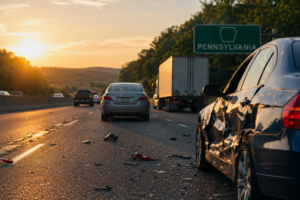
Summer driving in Pennsylvania often means longer trips, fuller vehicles, and roads shared by local commuters, tourists, delivery drivers, tractor trailers, motorcycles, and families heading to destinations across the state. Around Lancaster, drivers may travel through city streets, agricultural roads, Route 30, Route 222, and other corridors that can become crowded during weekends, holidays, events, and vacation periods. A driver who is unfamiliar with local turns, traffic patterns, lane changes, or construction detours may hesitate, stop suddenly, drift between lanes, or make an unsafe turn at the worst possible time.
Common Summer Road Trip Accident Scenarios
Common road trip crash scenarios include rear-end collisions in heavy traffic, intersection crashes near hotels or shopping areas, sideswipe accidents during lane merges, rollover crashes involving SUVs or loaded vehicles, motorcycle collisions, crashes with rideshare or delivery drivers, and multi-vehicle collisions where each insurer tries to shift blame. Injuries may include whiplash, concussions, broken bones, back injuries, shoulder injuries, knee trauma, burns, scarring, and emotional distress. Some symptoms appear right away, while others develop after the shock wears off. If you need more guidance about what to gather at the scene, McDonald At Law explains key documentation steps at https://mcdonaldatlaw.com/what-information-should-you-collect-after-an-accident/.
“Highly Recommended” is the epitome of an understatement when it comes to the firm of McDonald At Law!! Michael McDonald’s genuine pleasant, and empathetic demeanor masks his legal astuteness, and the level of aggressiveness he implements in pursuit of a victim’s right and the monetary compensation legally entitled to us. I was involved in a motor vehicle accident at the hands of an intoxicated driver in York County. In my case I suffered what I described as an atypical injury, Mr. McDonald offered to be my Lawyer immediately after explaining to him the events leading to and after being struck in turn causing me to have a heart attack, when another law firm seemed hesitant. McDonald At Law secured a sizable monetary compensation that not only met my expectation but exceeded it. Mr. McDonald’s wealth of experience, and legal prowess is priceless and never did he act as the case was beneath his practice. In the end my family and I were well compensated, but also felt justified. Thank you McDonald At Law!!- Miguel Lopez
What Injured Drivers Should Do First
The first priority after any crash is safety. Move away from traffic if you can do so without making injuries worse, call 911, and wait for emergency responders. A police report can help preserve basic facts, identify drivers and witnesses, note visible damage, and record whether citations were issued. Even when a crash seems minor, getting a medical evaluation can protect both your health and your claim. Soft tissue injuries, head injuries, and internal trauma may not feel severe at the scene.
After receiving medical care, keep records in one place. Save discharge papers, diagnostic test results, prescriptions, therapy notes, repair estimates, towing bills, rental car receipts, photographs, and any communication from insurance companies. Write down what you remember while the details are still fresh, including the date, time, road, weather, traffic, lane position, passengers, witnesses, and statements made by the other driver. Avoid guessing about speed, fault, or injury severity. A simple, factual record is more useful than a rushed explanation given under stress.
Pennsylvania Insurance Issues That Can Affect Recovery
Pennsylvania auto insurance rules can surprise injured drivers, especially people who do not regularly handle claims. Personal injury protection benefits may help pay certain medical expenses regardless of who caused the crash, depending on the policy. The at-fault driver’s liability coverage may be available for damages caused by negligent driving. Uninsured and underinsured motorist coverage may become critical when the other driver has no insurance or not enough coverage to address the harm caused.
Limited tort and full tort coverage can also affect a claim. Limited tort may restrict recovery for pain and suffering unless an exception applies or the injuries meet the legal standard for serious injury. Full tort generally preserves broader rights to pursue non-economic damages. These rules can be confusing when a crash occurs during a summer trip, especially if a household policy, rental vehicle, out-of-state driver, or employer-owned vehicle is involved. Drivers who are unsure which option applies can review this related discussion at https://mcdonaldatlaw.com/limited-v-full-tort-insurance-what-is-the-difference/.
Putting off an Attorney due to Cost Choosing a Personal Injury AttorneyRelated Videos
How Fault Is Evaluated After a Pennsylvania Crash
Pennsylvania uses a comparative negligence system. In practical terms, more than one person can share fault for a crash, and an injured person’s recovery may be reduced if they are found partly responsible. If the injured person is found more than 50 percent at fault, they may be barred from recovering damages from another negligent party. Insurance companies often study every detail to argue that the injured driver was speeding, following too closely, distracted, or slow to react.
This is why evidence matters. Useful proof may include police reports, dash camera footage, traffic camera footage, vehicle damage, skid marks, phone records, event data recorder information, witness statements, medical records, photographs, and expert analysis. In a rear-end collision, the back vehicle is often suspected of following too closely, but the full picture may involve sudden unsafe lane changes, brake lights that were not working, debris in the road, or a chain reaction crash. Drivers concerned about rear-end collision claims can read more at https://mcdonaldatlaw.com/pennsylvania-rear-end-motor-vehicle-accidents-a-real-threat/.
Why Medical Documentation Is So Important
Summer road trip injuries can interfere with work in ways that are easy to overlook at first. A warehouse worker with a back injury may lose overtime. A nurse with a shoulder injury may be unable to lift patients. A parent with a concussion may struggle with childcare, screens, noise, and transportation. A self-employed person may lose projects because they cannot drive, stand, sit, or use tools for long periods. These losses should be documented with pay records, tax records, employer notes, calendars, client messages, and written descriptions of how the injury changed normal routines.
Verdicts & Settlements
Dealing With Insurance Adjusters After a Road Trip Crash
Insurance adjusters may seem helpful, and many are professional, but their job is to evaluate claims for an insurance company. After a serious crash, you should be careful with recorded statements, broad medical authorizations, quick settlement offers, and casual comments that could be taken out of context. Saying “I am fine” during a stressful call may later be used to question a concussion, neck injury, or back injury. Accepting an early settlement may close the claim before you know the full cost of treatment.
A safer approach is to provide basic claim information, get medical care, keep records, and avoid detailed fault or injury statements until you understand the claim. Do not sign a release unless you are sure it covers only what you intend to resolve. Some releases end all injury claims permanently. A Lancaster car accident lawyer can help review insurance communications, calculate damages, identify all available policies, and push back when an insurer minimizes medical care or blames the injured driver without fair support.
Special Concerns for Lancaster and Central Pennsylvania Drivers
Lancaster County drivers face a mix of local and regional road risks. City traffic, rural intersections, farm equipment, tourists, horse and buggy travel, cyclists, pedestrians, and high-speed commuter routes can all be part of the same driving day. During summer, a route that feels familiar in March may look different with vacation traffic, road work, events, and out-of-town drivers. A crash near an attraction, hotel, campground, shopping center, or construction area may involve drivers from several counties or states, which can make communication and insurance coordination harder.
What Compensation May Include
The value of a Pennsylvania car accident claim depends on the evidence, insurance coverage, fault issues, medical prognosis, and how the injury affects the person’s life. Compensation may include medical expenses, future treatment costs, lost income, reduced earning ability, vehicle damage, rental costs, out-of-pocket expenses, pain, suffering, inconvenience, scarring, and loss of enjoyment of normal activities. In fatal crashes, surviving family members may have separate legal rights that should be evaluated quickly and carefully.
When to Speak With a Pennsylvania Car Accident Lawyer
You may want legal guidance if you suffered more than minor soreness, missed work, needed emergency care, were blamed for the crash, were hit by an uninsured or underinsured driver, received a low settlement offer, or feel pressured by an insurer. Legal help is also valuable when a crash involves multiple vehicles, commercial drivers, rideshare vehicles, rental cars, serious injuries, disputed medical treatment, or long-term symptoms. If emotional symptoms such as anxiety, nightmares, or fear of driving develop after a crash, this resource may help: https://mcdonaldatlaw.com/the-risk-of-ptsd-after-a-car-crash-is-very-real/.
McDonald At Law offers free consultations for injured drivers and families in Lancaster, Pennsylvania and across the state. A consultation can help you understand your next steps, what records matter, whether insurance coverage may apply, and how to avoid mistakes that could weaken your claim. The goal is not to add stress. The goal is to give you a clearer path forward while you focus on healing.
Disclaimer and Next Step
This information is for informational purposes only and is not legal advice. Consult an attorney about your specific situation.
If a summer road trip crash left you injured, you do not have to sort through medical bills, insurance questions, and fault disputes alone. Contact McDonald At Law to discuss your situation in a confidential free consultation and learn what options may be available under Pennsylvania law.

 
 |


 |