
Summer conditions in Pennsylvania create a combination of heat stress and traffic congestion that significantly increases the risk of serious truck collisions. Large commercial vehicles are especially vulnerable to tire failures, brake strain, and driver fatigue when temperatures rise and roads become crowded with seasonal traffic. In Lancaster County, where freight routes intersect with commuter and agricultural traffic, these risks become even more pronounced. McDonald At Law regularly evaluates how environmental conditions, vehicle maintenance issues, and driver decisions interact to cause preventable truck crashes.



McDonald At Law represents injured individuals and families in Lancaster, Pennsylvania who have been impacted by serious commercial vehicle accidents. Understanding how seasonal factors influence roadway safety helps clarify why these incidents occur and how liability may be determined.
How Summer Heat Impacts Large Commercial Trucks 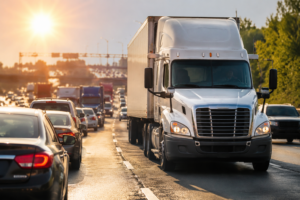
High temperatures place continuous stress on commercial trucks that are already operating under heavy loads. Unlike passenger vehicles, tractor-trailers rely on complex braking systems, high-pressure tires, and cooling systems that must function efficiently under extreme operating conditions. When ambient temperatures rise, each of these systems is pushed closer to its limits.
Tire pressure is one of the most immediate concerns. Heat causes air inside tires to expand, increasing internal pressure and making already worn or underinflated tires more vulnerable to blowouts. A tire failure on a multi-ton truck can lead to sudden instability, forcing the driver to react within seconds while navigating fast-moving traffic. In areas around Lancaster’s highways and connecting routes, these failures often occur at highway speeds where recovery is difficult.
Brake systems also experience increased strain during hot weather. Continuous braking in stop-and-go traffic generates heat buildup that can reduce braking efficiency over time. This condition, often referred to as brake fade, can extend stopping distances and reduce a driver’s ability to respond to sudden changes in traffic conditions. When combined with heavy cargo weight, the risks multiply significantly.
Engine cooling systems also face added pressure. Trucks operating for long hours in high temperatures may experience overheating, forcing drivers to slow down or pull over in active traffic lanes. These situations create secondary hazards for surrounding vehicles, especially on highways with limited shoulder space.
“Highly Recommended” is the epitome of an understatement when it comes to the firm of McDonald At Law!! Michael McDonald’s genuine pleasant, and empathetic demeanor masks his legal astuteness, and the level of aggressiveness he implements in pursuit of a victim’s right and the monetary compensation legally entitled to us. I was involved in a motor vehicle accident at the hands of an intoxicated driver in York County. In my case I suffered what I described as an atypical injury, Mr. McDonald offered to be my Lawyer immediately after explaining to him the events leading to and after being struck in turn causing me to have a heart attack, when another law firm seemed hesitant. McDonald At Law secured a sizable monetary compensation that not only met my expectation but exceeded it. Mr. McDonald’s wealth of experience, and legal prowess is priceless and never did he act as the case was beneath his practice. In the end my family and I were well compensated, but also felt justified. Thank you McDonald At Law!!- Miguel Lopez
Heavy Traffic Conditions Across Lancaster County in Summer
Summer traffic patterns in Lancaster County shift noticeably due to increased travel, construction activity, and regional transportation demand. Freight movement remains constant, but passenger vehicle volume rises significantly during warmer months, creating a mixed traffic environment that demands constant attention from commercial drivers.
Major corridors such as Route 30 and surrounding highway systems often experience periods of congestion, where vehicles are required to slow, merge, and change lanes frequently. For commercial trucks, these conditions reduce available reaction time and increase the likelihood of rear-end or lane-change collisions.
Traffic congestion also leads to unpredictable driving behavior. Passenger vehicles may attempt sudden lane changes or braking maneuvers to exit or merge, forcing truck drivers to make rapid adjustments. Due to the size and weight of commercial vehicles, these adjustments require more space and time, which is not always available in dense traffic conditions.
For individuals seeking guidance after roadway incidents, information on immediate steps following a collision can be found here:
https://mcdonaldatlaw.com/what-steps-should-you-take-after-a-car-accident/.
Putting off an Attorney due to Cost Choosing a Personal Injury AttorneyRelated Videos
Driver Fatigue and Heat-Related Physical Strain
Driver condition plays a central role in truck safety, particularly during summer months. Heat exposure inside a truck cab can contribute to dehydration, fatigue, and reduced cognitive performance. Even with air conditioning systems, prolonged driving in stop-and-go traffic can lead to rising internal cab temperatures and physical strain.
Fatigue affects reaction time, decision-making, and situational awareness. When a driver is operating a fully loaded commercial truck, even a slight delay in reaction can result in a serious collision. Regulatory rest requirements exist to reduce these risks, but tight delivery schedules and traffic delays can still contribute to extended driving periods during peak heat conditions.
Heat stress combined with fatigue can also reduce a driver’s ability to recognize mechanical warning signs, such as unusual vibrations, brake resistance, or tire pressure issues. This delay in recognition can turn a preventable mechanical issue into a serious roadway incident.
Mechanical Failures Linked to Heat and Road Stress
Mechanical issues in commercial trucks become more likely during hot weather, particularly when combined with high traffic volume and extended driving periods. Tire blowouts remain one of the most common heat-related failures, especially when tires are worn, overloaded, or improperly maintained.
Brake systems are also highly sensitive to temperature increases. Repeated braking in congested traffic generates friction heat that can overwhelm cooling capacity. When brake components overheat, stopping distance increases, creating dangerous conditions in traffic flow.
Other potential mechanical concerns include engine overheating and transmission strain. These issues are often linked to maintenance practices, vehicle age, and operational demands. When maintenance schedules are not followed properly, responsibility for resulting failures may extend beyond the driver to include maintenance providers or trucking companies.
Understanding these mechanical risks is essential when reviewing how liability is assessed after a serious crash.
Verdicts & Settlements
Construction Zones and Seasonal Roadway Changes
Summer months bring an increase in road construction across Pennsylvania. These zones introduce lane shifts, reduced speed limits, and narrow travel paths that can be difficult for large trucks to navigate safely, especially during periods of congestion and high heat.
Construction zones often require sudden merging and reduced spacing between vehicles. Passenger drivers may react unpredictably, while truck drivers must manage limited visibility and reduced maneuvering space. These conditions increase the likelihood of sideswipe collisions, rear-end impacts, and lane departure incidents.
When combined with heat-related mechanical strain and traffic congestion, construction areas become particularly high-risk environments for commercial vehicle operation.
Determining Liability in Truck Collision Cases
Truck accident cases require careful evaluation of multiple contributing factors. While environmental conditions such as heat and traffic may contribute to an incident, liability is determined based on conduct, maintenance practices, and compliance with safety standards.
Potential responsible parties may include truck drivers, trucking companies, cargo loaders, and maintenance providers. Each party has specific obligations related to vehicle safety, load management, and operational oversight. When these obligations are not met, they may contribute to a preventable collision.
Pennsylvania follows a comparative negligence framework, meaning responsibility can be distributed among multiple parties based on their level of fault. This makes detailed investigation and evidence review essential in serious injury claims.
Additional legal context involving accident-related injuries can be found here:
https://mcdonaldatlaw.com/look-out-for-the-signs-of-drowsy-driving/.
Steps to Take After a Truck Collision
After a truck collision, immediate actions can play an important role in both safety and future claims. Medical evaluation should always be a priority, even when injuries are not immediately visible. Some conditions may develop hours or days after the initial impact.
Collecting information at the scene, including witness details, vehicle positions, and environmental conditions, can help establish a clearer understanding of what occurred. Avoiding early statements to insurance representatives before legal guidance is also important, as initial interpretations of events may not reflect the full circumstances.
For detailed documentation guidance after a crash, visit:
https://mcdonaldatlaw.com/what-information-should-you-collect-after-an-accident/.
How Legal Representation Supports Injury Claims
Truck collision cases often involve multiple layers of evidence, including driver logs, maintenance records, black box data, and roadway conditions. Proper evaluation of this information is necessary to understand how heat, traffic, and operational decisions contributed to the crash.
McDonald At Law assists individuals and families in Lancaster, Pennsylvania by reviewing evidence, identifying responsible parties, and pursuing compensation for injuries and losses. Each case is approached with a focus on factual detail and clear analysis of contributing factors.
Speak With a Lancaster Truck Accident Attorney
Serious truck collisions can leave lasting physical, emotional, and financial impacts. Legal support can help clarify options and next steps following an incident involving a commercial vehicle in Lancaster or surrounding Pennsylvania communities.
This article is for informational purposes only and is not legal advice. Consult an attorney about your specific situation.

 
 |


 |